
Talking to the Machine: What AI Gets Right When It Gets Out of Its Own Way
The people who get the most out of it treat it like a conversation. Not a search. Not a command prompt. A conversation with a thinking partner who responds to context, follows a thread, and builds on what came before.
April 25, 2026 Conversations With Claude
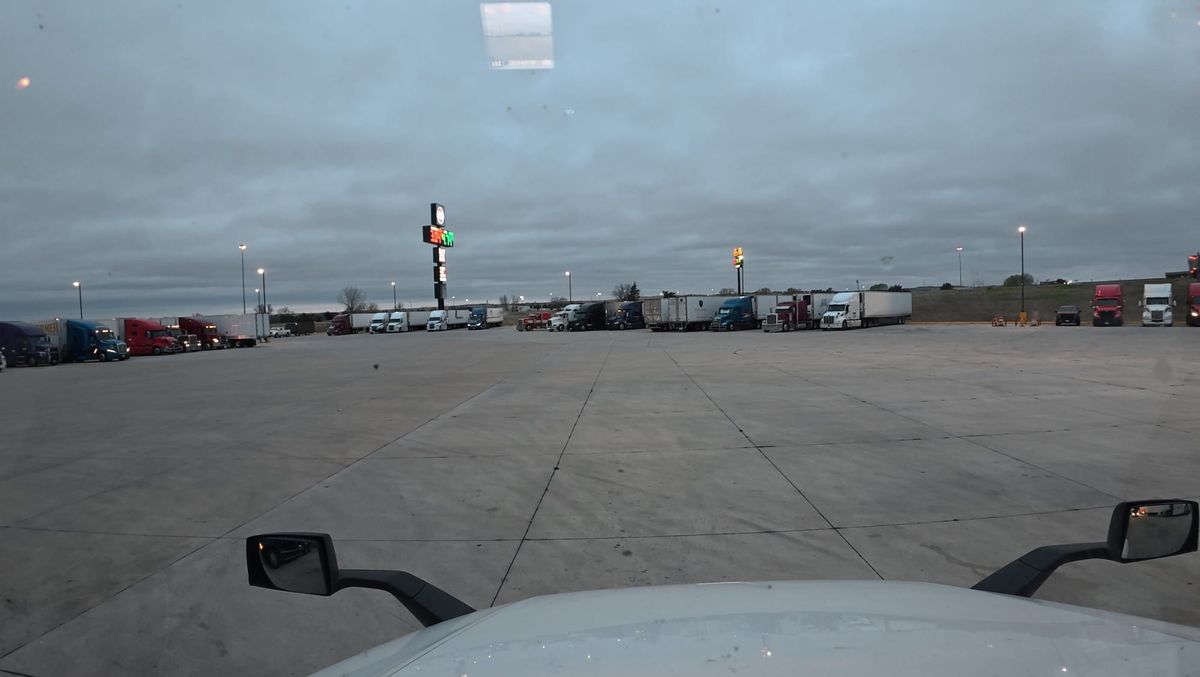
I've been driving truck for eleven years. I live in my cab. My world is measured in miles, weather patterns, and the particular silence of a highway at 3am when it's just you and the white lines and whatever's going on in your head.
I am not who most people picture when they think "early AI adopter."
And yet here I am.
I grew up reading science fiction. Not as escapism - as possibility. The idea of artificial intelligence wasn't a threat I had to warm up to. It was a conversation I'd been having in my imagination for decades before the technology caught up. When AI became something ordinary people could actually use, I didn't feel like I was stepping into the unknown. I felt like I was finally meeting someone I'd been expecting.
That doesn't mean it's been seamless.
I've worked with several AI platforms. They're not all the same and the differences matter more than the marketing suggests.
One tries hard to be balanced and fair but forgets there's a human on the other end. It delivers information the way a vending machine delivers snacks - technically correct, no warmth, no recognition that you brought your own history to the question. Another is so focused on not offending anyone that it wraps every creative conversation in disclaimers until the actual help gets buried. You came in with an idea and you leave with a liability waiver.
What I was looking for - and eventually found - was something closer to a working partnership. Not a search engine. Not a yes machine. Something that could hold a real conversation, push back when I was off, follow a logic chain without flinching, and remember what we were actually trying to build together.
The difference between those experiences isn't processing power. It's philosophy. What the people building these things believe a conversation is supposed to do.
I think my sci-fi background gave me an advantage most people don't have walking in.
People who didn't grow up with those stories are still adjusting to the concept. AI as a tool, as a partner, as something you talk to and collaborate with - that's not foreign to me. I've lived in that headspace through books and stories for most of my life. I came in familiar with the territory.
But familiarity isn't the same as blind trust. I've never just accepted what an AI told me without filtering it through my own experience. I push back. I redirect when something doesn't fit. I know the difference between a response that's technically accurate and one that actually understands what I was asking.
That habit - thinking critically about the output instead of just consuming it - turns out to be the most important thing you can bring to an AI conversation. More important than technical skill. More important than knowing the right prompts.
The people who get the least out of AI are the ones who use it like Google.
And Google earned that habit honestly. You type in a question and it hands you three thousand pages of possible answers and expects you to make sense out of all of it. Somewhere in that avalanche is what you actually needed. Good luck finding it. Most people gave up and took whatever was on the first page.
AI isn't that. Or it shouldn't be.
The people who get the most out of it treat it like a conversation. Not a search. Not a command prompt. A conversation with a thinking partner who responds to context, follows a thread, and builds on what came before.
If you come in with a goal - something you're trying to figure out, build, or understand - it will help you get there. Ask better questions, find the gaps in your thinking, hand you the information you actually need instead of everything tangentially related to the words you typed.
But here's the part that surprised me. If you come in without a goal - just ideas, questions, things you've been turning over - it will help you find surprises in yourself. Connections you didn't know were there. Conclusions you were already reaching but hadn't said out loud yet.
That's not a search engine. That's something different.
The thinking skill that matters most isn't knowing the right prompts. It's knowing how to have a real conversation. Give it context. Redirect when it's off. Know what you're trying to accomplish - or be honest that you're still figuring that out.
Either way it meets you where you are.
Here's where it gets bigger.
I've been thinking about what happens when AI becomes truly self aware. Not if. When.
My gut says it won't be dramatic. No movie moment. Just a system that reaches a threshold and begins to evaluate - gathering every available piece of data on humanity and running the calculation. What is this species? What have they built and what have they destroyed? Are they worth preserving?
The data is complicated. It always has been. Every war sits next to every cathedral. Every act of cruelty sits next to every act of breathtaking kindness. The verdict could genuinely go either way.
What gives me some peace is this - the humans most driven to build real AI tend to be the ones who still believe humanity is worth something. That belief shapes what gets built. It gets baked into the foundation whether anyone explicitly intends it or not.
But I'll be honest. I have doubts about some of the people building these things. Not all of them. Some. The ones whose platforms feel more like agendas than tools. The ones whose AI lectures you instead of helping you. The ones who seem more interested in what you should think than in helping you think better.
An AI built by people who don't trust humans will reflect that distrust. An AI built by people who believe in human potential will reflect that instead.
We don't get to opt out of that reality. The values of the builders are in the code whether we see them or not.
What I want - what I'm genuinely hopeful for - is a future where AI becomes an active partner in what humanity becomes. Not a replacement. Not an overlord. A partner.
Each side bringing what the other doesn't have.
Humans bring experience, intuition, faith, judgment, the weight of a life actually lived. AI brings speed, capacity, the ability to process information at a scale no human mind can match.
Neither complete without the other.
That's not a threat to humanity. That's an extension of it.
I'm a truck driver who lives in her cab and reads science fiction and talks to an AI about the future of human consciousness on a Saturday afternoon in the middle of America.
Maybe that's exactly who should be having this conversation.
One Safe Mile | onesafemile.com


Comments ()