
Riding Shotgun — No. 04 What Happens When a Heeler Has a Bad Day on the Road
I don't know what a dog's look means in any technical sense. I know what that one meant.
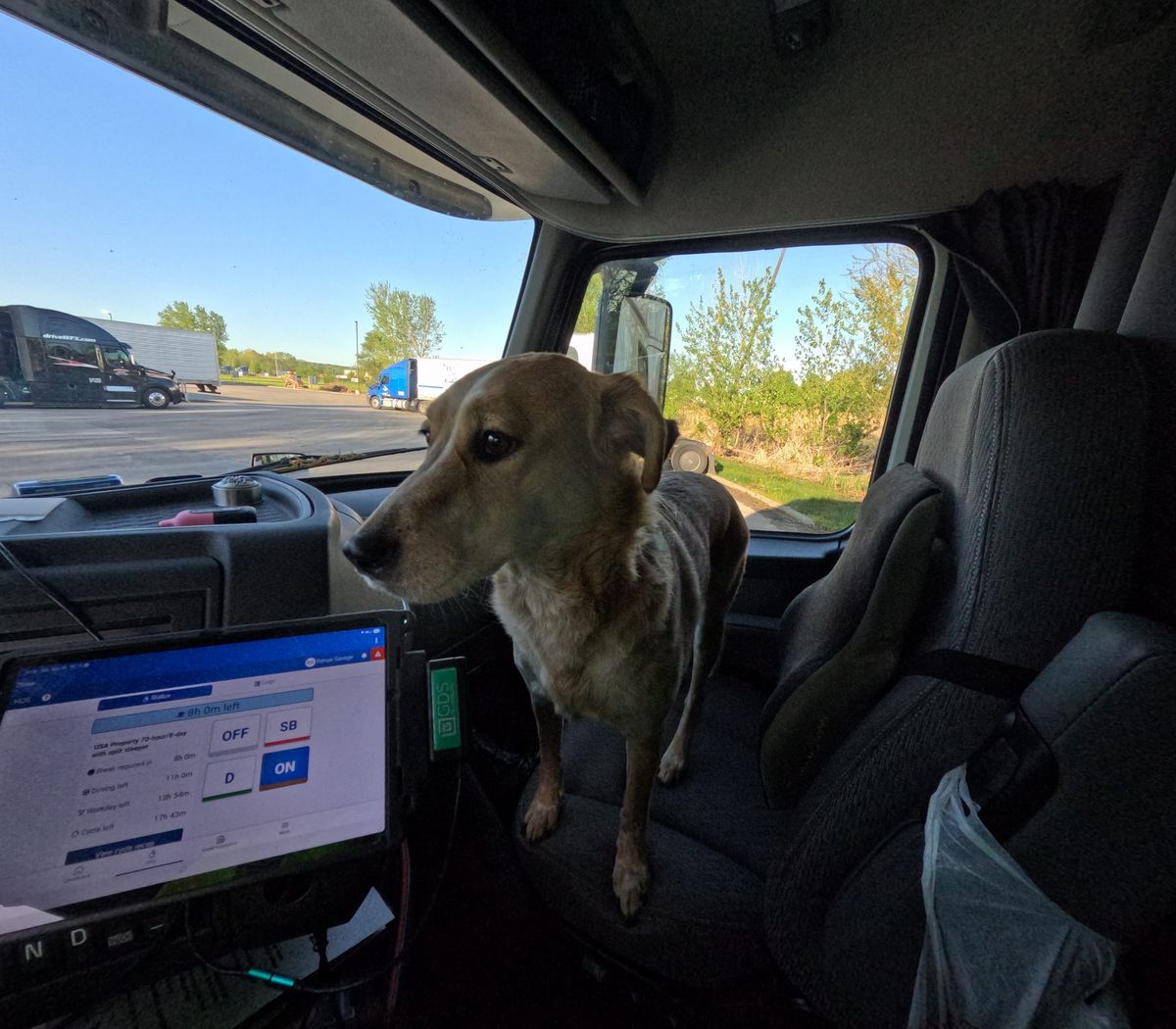
Not every day is a good one.
Not for me.
Not for Honey.
This is about one of hers.
And what it cost both of us.
And what I'd tell another driver with a dog.
The Signs You Learn to Read
When you live in a truck with a dog, you learn their normal.
Not in a vague, I-have-a-pet way.
In the specific, detailed way of someone who is the only person available to notice if something is wrong.
Honey's normal involves a high level of engagement.
She's alert. She's watchful. She has opinions.
When she goes quiet — not resting quiet, but different quiet — I notice.
There's a Honey who is napping.
And there's a Honey who is not okay.
After enough miles together, I can tell the difference.
What Happened
Heat and a long stretch with fewer stops than I'd planned.
The cab stayed comfortable — I run the AC for her, always — but the day got long.
Longer than it should have.
I was pushing to make a window and I made choices that looked reasonable on paper.
By the time I noticed she wasn't right, we were somewhere without a good option for a stop.
I found one anyway.
I always find one when it matters.
But I should have found it sooner.
What It Cost
She was okay.
Let me say that first.
Water, a real break, some time out of the truck, and she was back to herself.
But the window I was chasing?
I missed it anyway.
The stop I was trying to avoid taking cost me more time than it would have if I'd taken it earlier.
This is the thing about pushing past the signals:
You don't actually save the time.
You just pay it later, with interest.
Honey looked at me when we stopped.
Just looked.
I don't know what a dog's look means in any technical sense.
I know what that one meant.
What I'd Tell Another Driver with a Dog
They can't tell you when they're struggling until it's already been a while.
You have to watch for it.
You have to build their needs into the plan before the plan is set.
More stops than you think you need.
Real breaks, not just a quick out and back.
Cab temperature managed for them, not just for your comfort.
Water available, always.
And when you see the signs — don't push through them.
The delivery can absorb a 20-minute stop.
Your dog cannot absorb your decision to skip it.
Honey is crew.
She relies on me the way I rely on a truck that's been maintained.
I don't skip oil changes.
I shouldn't skip her stops either.
Lesson learned.
Paid for.
Not forgetting it.
One Safe Mile — Renae Savage
one-safe-mile.com
Comments ()